About De’Longhi Group
De’Longhi Group is an international group specialising in small domestic appliances and professional coffee, with products sold across more than 120 markets.
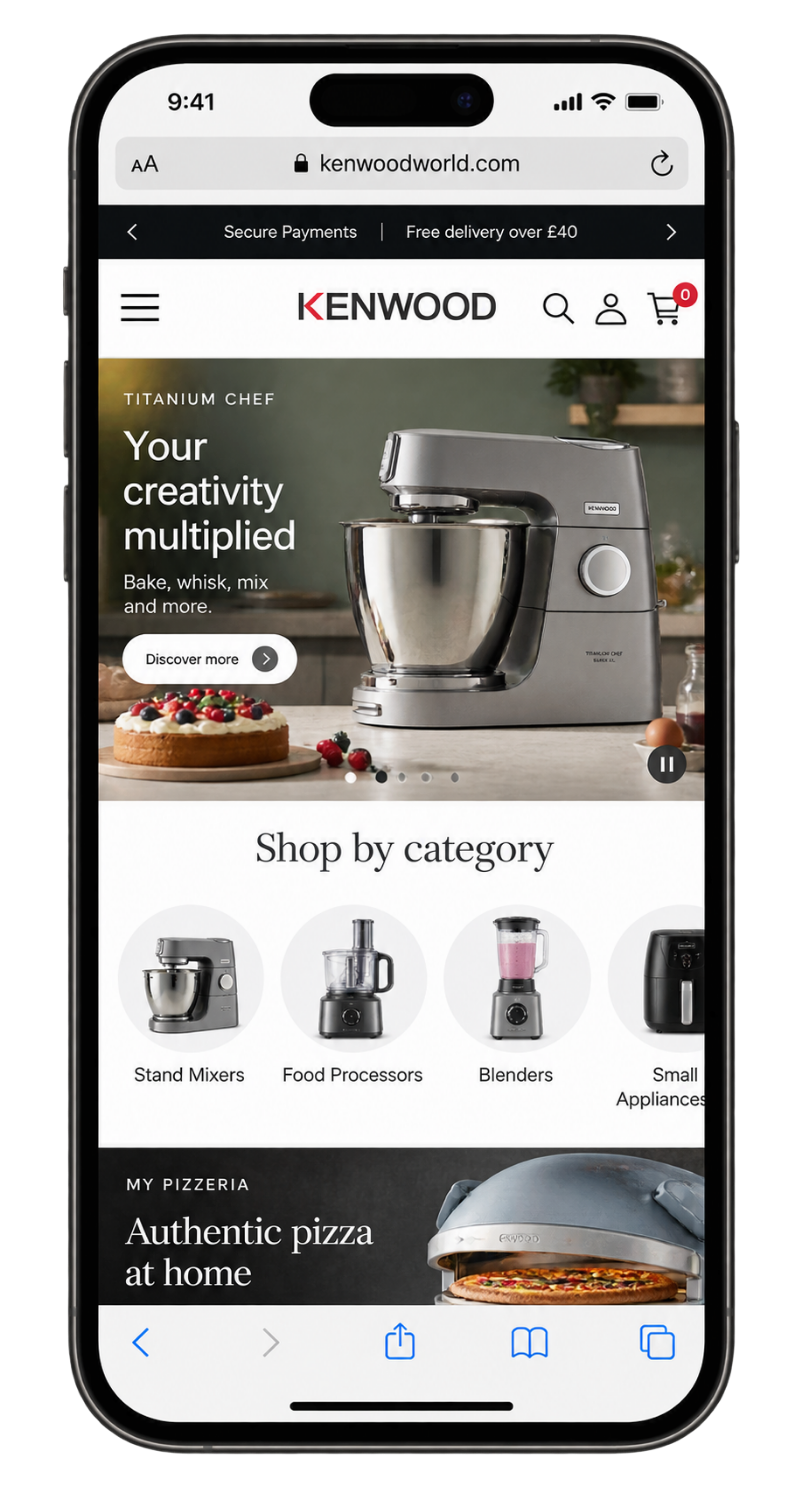
Its household portfolio includes De’Longhi, Kenwood and Braun, three established brands spanning coffee, food preparation and household appliances.
For this project, all three brands were being replatformed across multiple international websites, creating a complex QA challenge across shared technology, customer journeys and localised experiences.
The challenge
Replatforming one ecommerce brand carries risk. De’Longhi Group was replatforming three at the same time.
Working with implementation partner Valtech, the programme covered De’Longhi, Kenwood and Braun across multiple international websites.
Because the brands shared underlying platform components, a defect introduced once could potentially appear across several brands or markets.
The team needed to understand where the new platform was affecting purchase journeys, usability, localisation and brand consistency before those issues reached customers.
Our solution
Digivante ran a large-scale exploratory testing programme across all three brands.
Testing covered:
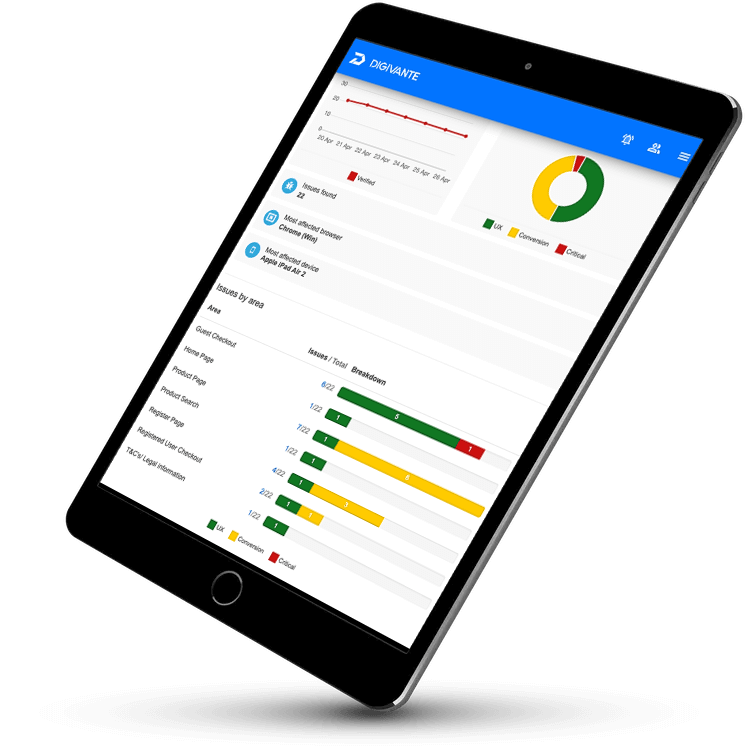
- Ecommerce journeys: Product discovery, product pages, basket, checkout, promotions and customer accounts
- Localisation: Checking translation quality and market-specific experiences
- Device and browser coverage: Validating the sites across different customer environments
- Regression testing: Comparing new functionality against the pre-replatform experience
- Brand consistency: Checking that shared journeys and interactions behaved appropriately across De’Longhi, Kenwood and Braun
Testing across all three brands helped expose both individual site problems and issues linked to shared components that could otherwise have been repeated across the wider programme.
The results
Digivante identified 489 issues across the replatform programme.
Of those, 29 were classified as high severity:
- 16 conversion-related issues, including purchase blockers, checkout defects and product-page faults
- 13 UX issues, including navigation inconsistencies, broken interactions and localisation gaps
The shared nature of the platform made those findings particularly important. Some problems could have appeared across several brands if they had reached launch unchanged.
De’Longhi Group and Valtech gained a prioritised view of launch risk across the programme before customers encountered the new sites.
489
issues identified
29
high-severity issues
3
brands tested
The takeaway
A shared platform can multiply risk as quickly as it creates efficiency.
For De’Longhi Group, the challenge was not simply validating three separate websites. It was understanding how shared technology behaved across three brands, multiple markets and different customer journeys.
Testing uncovered 489 issues before launch, including 29 high-severity conversion and UX problems.
For multi-brand replatforms, finding a shared problem early can mean fixing it once rather than discovering the same issue repeatedly after launch.
FAQs
Why did De’Longhi Group bring in Digivante?
De’Longhi Group was replatforming De’Longhi, Kenwood and Braun across multiple international websites and needed additional testing coverage before launch.
What did Digivante test?
Testing covered product discovery, product pages, basket, checkout, promotions, customer accounts, localisation, browser and device compatibility, regression and consistency across the three brands.
What did the testing find?
Digivante identified 489 issues, including 29 high-severity findings. Sixteen were conversion-related and 13 affected UX and consistency across the customer experience.
Why is QA particularly important in a multi-brand replatform?
When several brands use shared platform components, one defect can potentially affect more than one site or market. Testing across the wider programme helps identify those shared risks before they are repeated across multiple customer experiences.