
About IntelyCare
IntelyCare is a healthcare talent platform connecting nursing professionals with healthcare organisations and opportunities that fit their working lives. Its technology supports both healthcare organisations managing staffing needs and nursing professionals looking for shifts and other roles.
For the programme Digivante supported, the platform involved three interconnected systems: an internal operations hub, a facilities portal and a mobile app used by nursing professionals.
That meant a change in one part of the platform could affect workflows somewhere else entirely.
The challenge
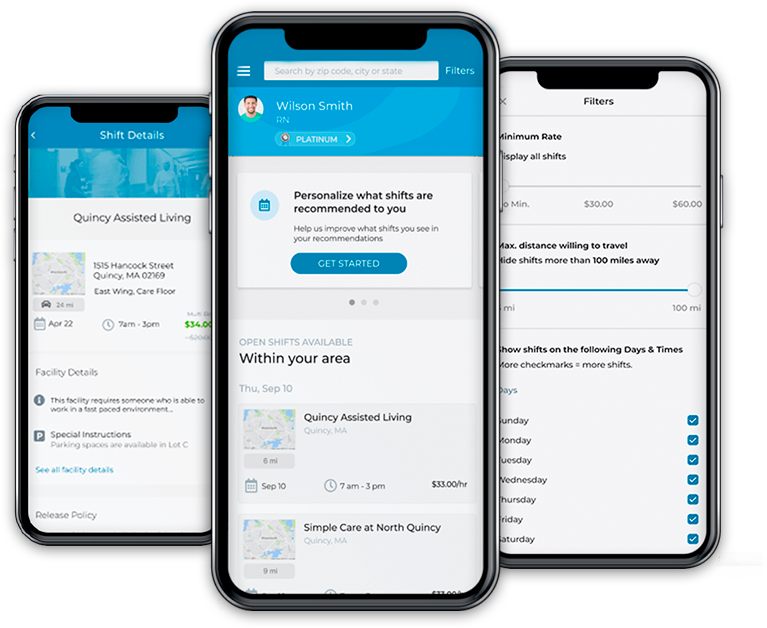
IntelyCare wasn’t maintaining one product. It was maintaining three systems that needed to work together.
The internal hub supported IntelyCare’s own teams. Healthcare facilities used a separate portal to create and manage shifts. Nursing professionals used the mobile app to find, apply for and manage work.
If one part of that chain failed, the real-world workflow could fail with it.
A facility might successfully create a shift, for example, but that offered little value if the nurse couldn’t see or book it correctly in the app.
With releases continuing over time, IntelyCare needed a repeatable way to check that existing functionality still worked while also finding the less predictable problems that appear when multiple systems interact.
Our solution
Digivante ran two testing streams in parallel.
A structured regression programme provided repeatable coverage around IntelyCare’s release schedule, while exploratory testing investigated cross-system workflows, edge cases and usability issues that scripted regression could miss.
Testing covered:
- Internal Hub: Scheduling, workforce administration, compliance and reporting
- Facilities Hub: Shift creation, staff requests, scheduling and contractor management
- Mobile Hub: Registration, profiles, shift discovery, applications, booking management and notifications
- Regression testing: Rechecking existing functionality through ongoing releases
- Cross-system workflows: Validating that actions and data moved correctly between the three hubs
- Exploratory testing: Finding edge cases and mobile usability issues beyond predefined scripts
Across the regression programme alone, Digivante completed 21 cycles and 3,607 test executions.
The results
Across regression and exploratory testing, Digivante identified 409 defects, including 36 high-severity issues.
The two testing streams uncovered different types of risk.
Regression testing
- 21 cycles
- 3,607 test executions
- 138 defects identified
- 24 high-severity defects
Exploratory testing
- 271 defects identified
- 12 high-severity defects
Regression findings clustered around areas such as scheduling workflows, permissions and data processing.
Exploratory testing surfaced more cross-system and mobile usability issues, particularly where the three hubs needed to work together rather than simply function correctly in isolation.
Together, the two approaches gave IntelyCare both a repeatable release safety net and broader coverage of the problems that structured regression alone could miss.
3,607
issues identified
409
defects identified
36
high-severity issues
The takeaway
Complex platforms rarely fail neatly within the boundaries of one system.
For IntelyCare, the important workflows crossed three different interfaces used by different groups of people. Testing each system in isolation would only tell part of the story.
Combining repeatable regression testing with exploratory coverage helped IntelyCare check both what should continue to work after every release and what might break between the gaps.
For digital teams managing interconnected products, that distinction matters. A successful release isn’t just one system passing its tests. The whole workflow still has to work for the people relying on it.
FAQs
What parts of IntelyCare’s platform did Digivante test?
Testing covered three interconnected systems: IntelyCare’s internal operations hub, a portal used by healthcare facilities and a mobile app used by nursing professionals to find and manage shifts.
What was the scale of the IntelyCare testing programme?
Digivante completed 21 regression cycles comprising 3,607 test executions, alongside a separate exploratory testing programme.
What did the testing find?
Across both testing streams, Digivante identified 409 defects, including 36 high-severity issues. Regression testing found 138 defects and exploratory testing identified a further 271.
Why combine regression and exploratory testing?
Regression testing provides repeatable checks that existing functionality still works after changes. Exploratory testing complements it by investigating edge cases, cross-system workflows and unexpected behaviour that predefined scripts may not expose.