About Aesop
Aesop is a skin, hair, and body care brand established in Melbourne in 1987, with stores and offices around the world.
For this project, Aesop wanted to understand what was happening between product discovery and order completion across three very different ecommerce markets.
The challenge
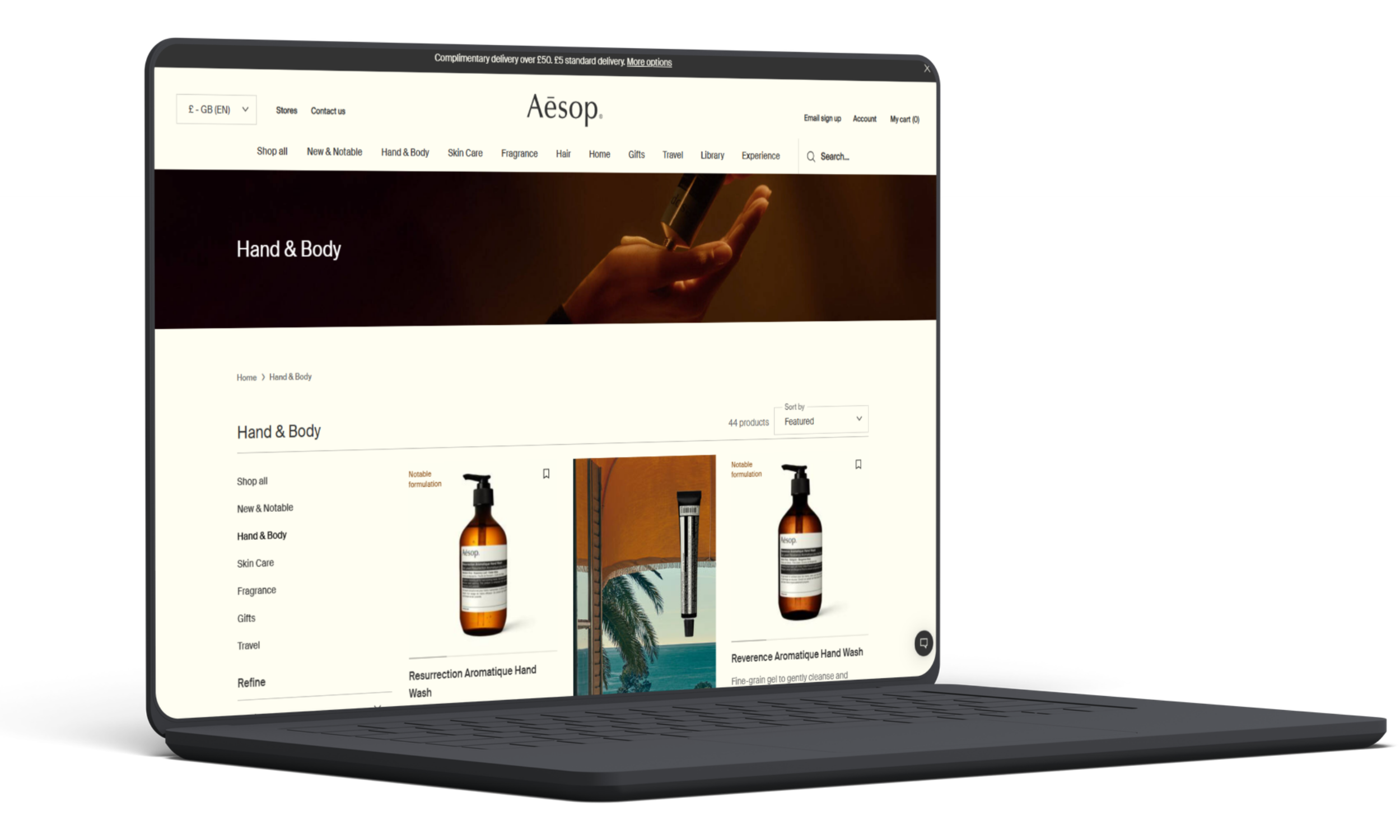
Aesop’s analytics showed shoppers were browsing and adding products to their carts, but some were leaving before completing their purchase.
The challenge was working out why.
The issue was appearing across the UK, France, and Japan, where differences in language, payment behaviour, and customer expectations meant the cause could be global, market-specific, or a combination of both.
Aesop needed evidence from the actual customer journey rather than guessing which part of checkout needed fixing.
Our solution
Digivante ran two focused exploratory testing cycles across the UK, France, and Japan.
Testers followed the ecommerce journey as customers would, with particular attention on the point where interest needed to turn into purchase.
Testing covered:
- Product discovery: Following the journey from browsing towards purchase
- Basket and checkout: Investigating friction across conversion-critical steps
- Payment flows: Checking behaviour through to order completion
- UX: Identifying unclear feedback, inconsistent flows, and points of hesitation
- Localisation: Validating each market on its own terms rather than treating it as a translated version of one experience
This allowed Aesop to see not only what was going wrong, but whether the same problem appeared across markets or was specific to one location.
The results
Digivante identified 102 issues across the two testing cycles, with 37 classified as high severity.
Of those high-severity findings:
- 22 related to conversion
- 10 related to UX
- 5 were functional
The conversion findings were the most commercially significant, including issues capable of stopping a transaction or adding enough friction for customers to abandon the journey.
The UX findings showed where unclear or inconsistent experiences could undermine confidence at the point customers were being asked to buy.
By breaking the findings down by both type and market, Aesop gained a prioritised view of where checkout friction was occurring and what needed attention first.
102
issues identified
37
high-severity findings
3
international markets tested
The takeaway
“Cart abandonment” can describe the symptom without explaining the problem.
For Aesop, testing the journey across three markets turned that broad analytics signal into specific evidence about conversion, UX, and functional issues.
That gave the team something much more useful than knowing customers were dropping out: a clearer view of where they were struggling, why, and whether the problem changed by market.
For international ecommerce teams, that distinction matters. The same conversion problem does not always have the same cause everywhere.
FAQs
Why did Aesop bring in Digivante?
Aesop wanted to understand why shoppers were reaching basket but not always completing their purchase. Digivante tested the journey across three markets to identify where conversion, UX, and functional issues were creating friction.
What did Digivante test for Aesop?
Digivante tested the journey from product discovery through basket, payment, and order completion, with additional localisation coverage across the UK, France, and Japan.
What did the testing find?
Testing identified 102 issues across two cycles, including 37 high-severity findings. Of those, 22 related to conversion, ten to UX, and five to functional behaviour.
Why test checkout separately across different markets?
Language, payment behaviour, localisation, and customer expectations can differ by market. Testing each experience individually can reveal problems that may not appear when only one country is used as the benchmark.